

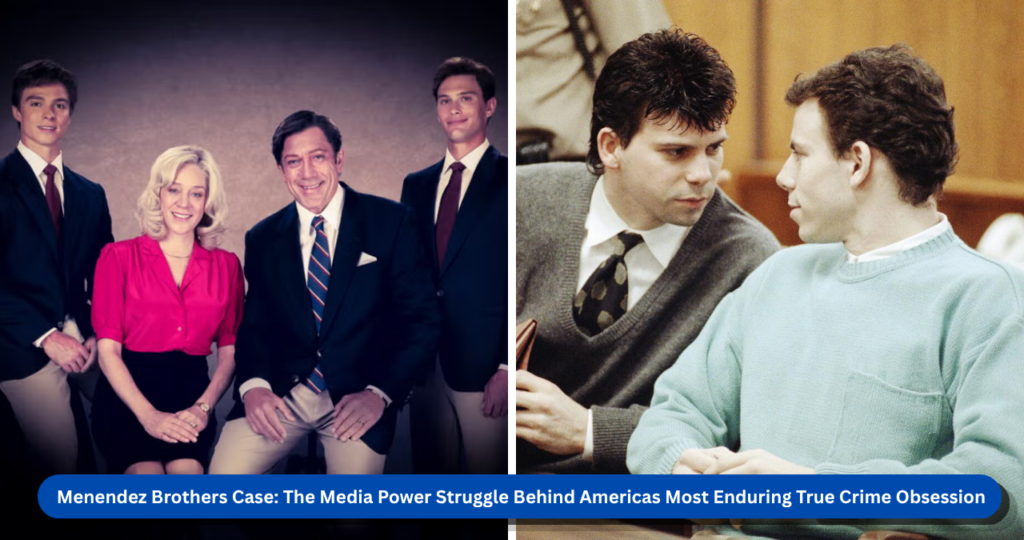
The menendez brothers case remains one of the most commercially influential and culturally dissected criminal trials in modern American media history. Long before streaming platforms transformed courtroom drama into binge driven entertainment, the story of Lyle and Erik Menendez generated network television dominance, tabloid circulation spikes, and relentless cable news economics. Its endurance reflects more than criminal notoriety. The case became a prototype for how public fascination, televised testimony, and psychological narratives could create lasting audience engagement across generations, eventually evolving into a lucrative intellectual property cycle for documentaries, dramatizations, podcasts, and prestige streaming productions.
Within the broader Hollywood and media ecosystem, the menendez brothers case occupies a rare intersection between legal history and entertainment branding. Networks, publishers, and later streaming giants recognized that the trial combined wealth, privilege, family trauma, and celebrity culture in ways that mirrored elite fiction. Prosecutors and defense attorneys themselves became media figures, while courtroom footage gained archival value comparable to major televised cultural events of the 1990s. The longevity of audience interest also revealed how true crime audiences increasingly favored morally complex narratives over straightforward criminal reporting, creating a lasting template later expanded by Netflix, Hulu, and major podcast studios.
The continuing relevance of the menendez brothers case now extends beyond courtroom analysis into broader conversations about media influence, trauma narratives, public perception, and the economics of serialized storytelling. Renewed interest from younger streaming audiences has reframed the brothers less as tabloid villains and more as figures within a larger discussion about abuse allegations, privilege, masculinity, and prosecutorial spectacle. That shift illustrates how cultural timing reshapes historical interpretation. Modern coverage increasingly examines not only the crime itself, but also how the American entertainment industry monetized grief, scandal, and televised justice during a transformative media era.
Profile Snapshot
| Full Name | Lyle Menendez And Erik Menendez |
|---|---|
| Known For | High Profile Beverly Hills Murder Trial And Landmark True Crime Media Coverage |
| Date Of Birth | Lyle Menendez: January 10 1968 | Erik Menendez: November 27 1970 |
| Birthplace | Princeton New Jersey United States |
| Nationality | American |
| Profession | Public Figures Associated With Historic Criminal Trial And Media Culture |
| Years Active | 1989 To Present In Media And Public Discourse |
| Major Awards | None |
| Production Company | Not Applicable |
| Estimated Net Worth | No Significant Personal Net Worth Due To Life Imprisonment |
| Parents | José Menendez And Kitty Menendez |
| Siblings | Lyle Menendez And Erik Menendez |
| Known For In Media | Televised Courtroom Drama True Crime Documentaries And Streaming Adaptations |
| Notable Streaming Coverage | Netflix Documentaries Peacock Specials And Multiple Podcast Series |
| Current Status | Serving Life Sentences Without Parole |
Early Life And Personal Foundations
The menendez brothers case cannot be understood without examining the affluent but reportedly volatile household shaped by José and Kitty Menendez. José Menendez built a high powered corporate career through companies including RCA Records and LIVE Entertainment, placing the family inside elite Beverly Hills social circles associated with entertainment executives and rising Hollywood wealth. Public narratives initially portrayed the brothers as privileged beneficiaries of excess, though later defense arguments reframed their upbringing around allegations of severe emotional and sexual abuse. Lyle and Erik attended prestigious schools, participated in competitive athletics, and experienced constant pressure tied to status and achievement. That contrast between outward prosperity and claims of internal dysfunction became central to why the case fascinated audiences. It challenged assumptions about wealth, family image, and the mythology of the American success story during the late twentieth century.
Career Evolution And Breakthroughs
Unlike conventional celebrity trajectories, the menendez brothers case evolved into a media phenomenon through escalating public exposure rather than intentional fame. The 1989 murders initially appeared to investigators as organized crime related killings because José Menendez maintained significant business visibility within entertainment and corporate circles. Once suspicion shifted toward the brothers, televised hearings transformed them into recognizable national figures almost overnight. The first trials in the early 1990s coincided with expanding cable news infrastructure, enabling courtroom broadcasting to operate as serialized entertainment. Legal analysts, talk shows, and tabloid magazines built recurring coverage cycles that dramatically increased ratings and circulation. The prosecution emphasized greed and inheritance motives, while defense attorneys crafted a trauma centered narrative unprecedented in televised criminal litigation. That strategic contrast turned the proceedings into an emotionally divided cultural event that shaped future true crime programming economics.
Major Works Achievements And Cultural Influence
The enduring achievement of the menendez brothers case lies not in traditional accomplishments but in its transformational effect on the true crime industry and televised legal storytelling. The trial became a precursor to the media saturation later seen in cases involving O.J. Simpson and other nationally televised proceedings. Networks discovered that courtroom footage could deliver audience retention comparable to scripted drama, especially when themes included wealth, family betrayal, and psychological complexity. Decades later, streaming services such as Netflix and Peacock revitalized interest through documentaries and dramatized adaptations aimed at younger viewers unfamiliar with the original coverage. The brothers also became recurring reference points in discussions about trauma testimony and public empathy. Cultural influence expanded further through podcasts, YouTube commentary, and social media reinterpretations that reframed the case for digital audiences increasingly skeptical of simplistic prosecutorial narratives and legacy tabloid framing.
Relationships Love Life And Inner Circle
Family relationships sit at the emotional center of the menendez brothers case because nearly every major public argument revolved around trust, loyalty, fear, and manipulation within the Menendez household. Prosecutors characterized the brothers as financially motivated heirs eager to inherit their parents’ fortune, while defense attorneys argued the killings emerged from years of alleged abuse and psychological control. Despite incarceration, both brothers eventually married and maintained active correspondence with supporters, reflecting how public fascination evolved into unusual forms of emotional investment among segments of the true crime community. Their relationship with each other also remained significant, especially after years spent in separate prison facilities before eventual reunification. Legal teams, therapists, and family supporters became influential figures in shaping public perception over time. Modern audiences often interpret these dynamics through contemporary conversations surrounding trauma, masculinity, and cycles of family dysfunction.
Lifestyle Net Worth And Business Ventures
Financial discussion surrounding the menendez brothers case has always centered on the enormous contrast between inherited privilege and ultimate personal collapse. José Menendez accumulated substantial wealth through executive positions in entertainment and consumer media industries, giving the family access to luxury homes, elite education, and high status social networks in Beverly Hills. After the murders, prosecutors repeatedly highlighted expensive purchases made by the brothers, framing spending behavior as evidence of greed and premeditation. Media coverage amplified those details because lavish lifestyles created dramatic tension within public storytelling. Over time, however, the economic narrative shifted from fascination with wealth to analysis of how affluence shaped both legal defense strategies and media attention itself. Unlike many famous criminal cases, the menendez brothers case became inseparable from broader conversations about class privilege, inherited power, and how wealth influences audience sympathy inside the American judicial spectacle.
Public Image Media Coverage And Reputation
Public perception of the menendez brothers case has undergone one of the most significant reputation transformations in modern true crime history. During the 1990s, tabloid television and mainstream news largely portrayed Lyle and Erik Menendez as spoiled Beverly Hills heirs driven by entitlement and financial ambition. Comedy programs, late night television, and sensationalist magazine covers reinforced that narrative for years. Yet digital era audiences approached the case differently. Streaming documentaries, social media discourse, and renewed examination of abuse allegations encouraged more nuanced interpretations, especially among younger viewers shaped by contemporary conversations around trauma disclosure. This reputational shift reflects changing cultural attitudes toward male victimhood and psychological testimony. It also demonstrates how media framing evolves across generations. The case became a powerful example of how narrative control in high profile litigation can shift dramatically once new platforms disrupt earlier television driven consensus.
Drew Pritchard New Wife: Public Curiosity And The Business Of Television Reinvention
Recent Updates And Current Focus
Recent developments have restored the menendez brothers case to the center of mainstream entertainment and legal conversation through renewed documentary production and expanded streaming distribution. Platforms competing within the true crime marketplace recognized the enduring commercial value of the story, particularly among younger audiences consuming serialized legal content through TikTok clips, podcasts, and binge viewing models. New productions increasingly emphasize emotional context and alleged abuse claims rather than relying solely on sensational murder framing common during the original trials. Legal advocates and family supporters have also pushed for reevaluation discussions tied to evolving standards regarding trauma evidence. Meanwhile, Hollywood producers continue exploring adaptations because the story combines recognizable cultural history with ongoing public debate. The case now operates as both historical legal material and modern streaming era intellectual property, illustrating how legacy courtroom narratives can continuously regenerate commercial and cultural relevance decades after initial media saturation.
Lesser Known Facts About Menendez Brothers Case
One lesser known aspect of the menendez brothers case involves how profoundly it influenced future courtroom broadcasting strategy inside television networks and legal journalism. Producers discovered that emotional testimony, particularly discussions involving family abuse allegations, generated unusually high audience retention compared with standard legal reporting. Another overlooked detail is the degree to which cultural perceptions shifted after widespread access to archival footage online, allowing younger viewers to evaluate testimony independently rather than through edited television summaries. The brothers were also highly engaged in competitive tennis during adolescence, a detail frequently referenced to illustrate the disciplined image cultivated by their father. Additionally, several entertainment executives privately followed the case closely because José Menendez maintained respected corporate relationships within the media industry. These overlapping connections between celebrity culture, business influence, and courtroom drama helped transform the proceedings into an enduring American media landmark.
Why Menendez Brothers Case Matters Today
The menendez brothers case still matters because it anticipated many defining characteristics of contemporary media culture, including trauma centered storytelling, serialized true crime economics, and public reinterpretation through digital platforms. Modern streaming companies continue revisiting the story because it contains enduring audience triggers: wealth, violence, family dysfunction, and psychological ambiguity. The case also illustrates how generational shifts reshape collective judgment. Younger viewers frequently interpret the brothers through frameworks involving abuse disclosure and institutional skepticism, while earlier audiences often prioritized financial motive narratives. From an industry perspective, the case demonstrated the commercial scalability of courtroom entertainment long before streaming algorithms formalized binge driven consumption patterns. Its influence extends into podcasting, documentary production, legal commentary, and social media analysis, proving that certain criminal cases evolve into permanent cultural assets capable of sustaining relevance across radically different technological and editorial eras.
Conclusion
The menendez brothers case remains one of the most influential intersections of crime, media economics, and cultural narrative evolution in American history. What began as a shocking Beverly Hills homicide investigation ultimately transformed into a blueprint for modern true crime commercialization, influencing television strategy, streaming investment, and public engagement with courtroom storytelling. Its endurance reflects more than sensationalism. The case continues resonating because it forces audiences to confront uncomfortable questions involving privilege, trauma, family power structures, and media manipulation. As entertainment companies compete aggressively for recognizable intellectual property within the streaming economy, the story retains exceptional commercial and editorial value. Decades later, the menendez brothers case still functions as both historical legal event and evolving cultural mirror, revealing how public perception changes when technology, generational attitudes, and narrative framing fundamentally shift over time.
Frequently Asked Questions
What Is The Menendez Brothers Case Best Known For?
The menendez brothers case is best known for the 1989 murders of José and Kitty Menendez and the nationally televised trials that followed. The proceedings became a landmark moment in true crime media because they combined wealth, family trauma allegations, and nonstop television coverage.
Why Did The Menendez Brothers Case Receive So Much Media Attention?
The story involved Beverly Hills wealth, entertainment industry connections, and emotionally charged courtroom testimony. Television networks recognized early that the menendez brothers case generated ratings comparable to scripted drama, helping establish modern true crime broadcasting patterns.
Are Lyle And Erik Menendez Still In Prison?
Yes, both brothers remain incarcerated after receiving life sentences without parole. Renewed public interest in the menendez brothers case has nevertheless fueled ongoing legal discussions and documentary reexaminations.
How Did Streaming Platforms Revive Interest In The Menendez Brothers Case?
Netflix, Peacock, podcasts, and social media creators introduced the story to younger audiences unfamiliar with the original trials. Streaming culture encouraged viewers to reassess testimony and media framing independently from the tabloid narratives dominant during the 1990s.
What Was The Main Defense Strategy In The Menendez Brothers Case?
Defense attorneys argued that years of alleged emotional and sexual abuse influenced the brothers’ psychological state and decision making. That strategy dramatically shifted public discussion because abuse centered testimony was rarely explored at such scale in televised criminal trials.
Did The Menendez Brothers Inherit Their Parents Wealth?
Although inheritance motives were central to the prosecution narrative, legal costs and convictions prevented the brothers from benefiting financially in any lasting way. The economic dimension of the menendez brothers case instead became symbolic of debates surrounding privilege and accountability.
Why Does The Menendez Brothers Case Still Matter In Popular Culture?
The case remains relevant because it predicted the rise of trauma focused true crime storytelling and nonstop courtroom media analysis. It also demonstrates how public interpretation evolves when new generations revisit older legal narratives through modern cultural frameworks.
How Did The Menendez Brothers Case Influence True Crime Entertainment?
The proceedings helped prove that courtroom drama could sustain long term audience engagement across television, publishing, documentaries, and later streaming platforms. Many executives now view the case as an early blueprint for serialized true crime monetization.