

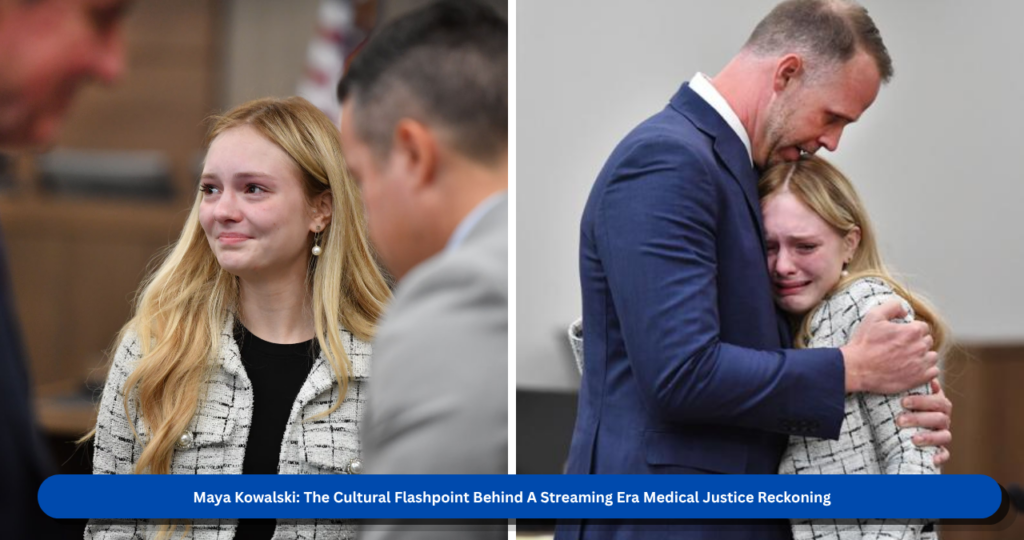
Maya Kowalski became internationally recognized not through traditional entertainment fame but through a documentary narrative that intersected healthcare, media influence, legal accountability, and streaming-era audience behavior. After the release of the Netflix documentary <span>Take Care of Maya</span>, her story evolved from a regional legal dispute into a globally discussed case that generated debate across medicine, child welfare policy, and digital media ecosystems. The scale of attention demonstrated how streaming platforms increasingly shape public understanding of complex institutional conflicts.
Unlike conventional public figures whose influence emerges through entertainment franchises or celebrity branding, Maya Kowalski entered public consciousness through a deeply emotional narrative involving medical treatment, parental advocacy, and legal confrontation. The widespread audience response highlighted the growing power of documentary storytelling within platforms such as <span>Netflix</span>, where real-life cases can generate cultural momentum comparable to prestige dramas or major true-crime productions. Her visibility reflects broader shifts in how public trust, media narratives, and institutional scrutiny now operate in the streaming economy.
Understanding Maya Kowalski requires more than revisiting the events chronicled in the documentary. Her story sits at the intersection of healthcare economics, legal strategy, media amplification, public perception, and evolving audience expectations regarding transparency and accountability. The discussion surrounding her case continues to influence conversations about rare illnesses, patient advocacy, documentary ethics, and the role streaming platforms play in transforming individual experiences into national cultural debates. Recent legal developments and continuing public attention have kept her story relevant well beyond the initial release cycle.
Profile Snapshot
| Attribute | Detention Basin | Retention Basin |
|---|---|---|
| Primary Purpose | Temporary runoff storage | Permanent water storage |
| Water Presence | Usually dry | Permanent pool |
| Flood Control | Excellent | Very Good |
| Peak Flow Reduction | Excellent | Good to Excellent |
| Water Quality Improvement | Moderate | High |
| Groundwater Recharge | Moderate | Potentially High |
| Habitat Creation | Limited | Significant |
| Mosquito Risk | Lower | Higher if unmanaged |
| Land Requirement | Moderate | Higher |
| Construction Complexity | Moderate | Moderate to High |
| Maintenance Needs | Periodic | Continuous |
| Visual Amenity Value | Low | High |
| Typical Urban Use | Commercial and residential developments | Parks, subdivisions, mixed-use communities |
Early Life And Personal Foundations
Maya Kowalski was born in Florida to Jack Kowalski, a firefighter, and Beata Kowalski, a nurse whose medical knowledge later became central to public discussions surrounding the family’s experience. She grew up with her brother Kyle in a household that valued education, discipline, and close family involvement. Before gaining public visibility, her life largely reflected a typical middle-class American upbringing until severe health complications emerged during childhood. Those challenges altered the trajectory of the entire family and placed them inside highly complex medical and legal systems. One reason Maya Kowalski resonated with audiences worldwide is that her story reflects a collision between parental advocacy and institutional authority, a conflict that many viewers recognized beyond the specifics of her medical condition.
Career Evolution And Breakthroughs
The public profile of Maya Kowalski developed through circumstances rather than career ambition. Her breakthrough into international awareness came when filmmakers and producers behind Take Care of Maya transformed years of medical records, courtroom battles, and family tragedy into a documentary that reached a massive streaming audience. Unlike celebrities whose visibility depends on box office performance or television ratings, Maya Kowalski became known through narrative impact and public empathy. The documentary’s release created a powerful media moment because it aligned with growing audience interest in institutional accountability stories. Strategic timing also mattered. During the streaming era, documentaries increasingly compete with scripted content for cultural attention, allowing personal stories to generate substantial influence without traditional entertainment infrastructure.
Major Works Achievements And Cultural Influence
The most significant project associated with Maya Kowalski remains Take Care of Maya, which premiered at the Tribeca Film Festival before reaching global audiences through Netflix. The documentary earned substantial attention, generated widespread media coverage, and received News and Documentary Emmy nominations for direction and research. Maya Kowalski’s cultural influence stems less from artistic production and more from the documentary’s ability to shape public conversations about healthcare systems, rare diseases, and child welfare investigations. A concise explanation of her influence is simple: her story transformed an individual family crisis into a broader debate about institutional decision-making. The documentary became part of a larger trend where streaming platforms create social impact through nonfiction storytelling that reaches audiences far beyond traditional documentary viewership.
Relationships Love Life And Inner Circle
Public information regarding Maya Kowalski’s personal relationships remains limited, reflecting a deliberate separation between public advocacy and private life. Her most visible family connections remain her father Jack and her brother Kyle, both of whom appeared prominently during legal proceedings and media coverage surrounding the family’s experiences. The emotional significance of her relationship with her late mother Beata continues to shape public understanding of the case and remains central to the documentary narrative. Beyond family, Maya Kowalski’s most influential professional relationships have emerged through attorneys, journalists, filmmakers, and advocates who helped amplify the family’s story. This network illustrates how modern public influence often develops through collaborative ecosystems involving media producers, legal teams, and documentary creators rather than traditional celebrity management structures.
Lifestyle Net Worth And Business Ventures
There is no verified public estimate that reliably establishes Maya Kowalski’s net worth, making many online financial claims difficult to substantiate. Unlike entertainers, athletes, or entrepreneurs, her visibility originates from a legal and medical story rather than commercial ventures. Financial discussions surrounding Maya Kowalski generally focus on the highly publicized litigation involving <span>Johns Hopkins All Children’s Hospital</span> rather than personal wealth accumulation. Industry observers often note that public attention created opportunities for advocacy appearances, interviews, and media participation, yet no major business empire, production company, endorsement portfolio, or investment network has been publicly documented. The economic significance of her story lies more in the financial implications of healthcare litigation and documentary distribution than in celebrity wealth-building models.
Public Image Media Coverage And Reputation
Public perception of Maya Kowalski has been shaped largely through documentary storytelling, courtroom testimony, and extensive media coverage. Supporters view her as a symbol of patient advocacy and institutional accountability, while critics have debated aspects of the broader narrative presented in media discussions. This divide illustrates a significant feature of modern documentary culture: audiences increasingly evaluate complex legal and medical disputes through emotionally powerful streaming content. Maya Kowalski’s reputation has therefore evolved alongside ongoing public debate rather than through traditional celebrity image management. The case also demonstrates how digital platforms amplify competing interpretations of the same events, creating parallel narratives across news organizations, social media communities, legal commentary spaces, and documentary audiences.
Paris Hilton Wedding: The Cultural Strategy Behind A Modern Celebrity Empire
Recent Updates And Current Focus
Recent developments have kept Maya Kowalski in the public conversation despite the documentary’s release occurring several years ago. Media reports indicate that she continues to manage symptoms associated with Complex Regional Pain Syndrome while participating in advocacy efforts and public appearances connected to awareness initiatives. The legal dimensions of the case have remained active through appeals and continuing public discussion, extending the lifespan of the story well beyond the documentary cycle. Maya Kowalski’s current relevance illustrates a broader streaming-era phenomenon in which documentary subjects maintain long-term visibility through legal developments, interviews, podcasts, conferences, and ongoing audience engagement. Rather than fading after a release window, influential nonfiction stories increasingly operate as evolving media franchises tied to real-world developments.
Lesser Known Facts About Maya Kowalski
Several lesser-known aspects of Maya Kowalski’s background have attracted interest among audiences researching her story. She participated in educational programs for gifted students and reportedly demonstrated strong academic abilities before health complications disrupted normal childhood routines. Her family also maintained Polish cultural connections through her mother, a detail that later surfaced during discussions about communication restrictions documented in legal proceedings and media coverage. Another overlooked aspect involves the lengthy rehabilitation period required after her hospitalization experience, which reportedly involved therapies aimed at restoring mobility and daily functioning. These details matter because they expand public understanding beyond courtroom headlines, revealing the educational, cultural, and personal dimensions that existed before global attention transformed her into a recognizable public figure.
Why Maya Kowalski Matters Today
Maya Kowalski remains relevant because her story touches several defining issues of contemporary society simultaneously: healthcare trust, institutional accountability, documentary influence, streaming-era storytelling, and the power of public narratives. Her significance extends beyond personal circumstances because the case demonstrated how a streaming documentary can influence national conversations and reshape public awareness around specialized medical issues. In practical terms, Maya Kowalski became a symbol of the growing relationship between media visibility and legal scrutiny. The broader impact lies in how audiences, policymakers, healthcare professionals, and journalists continue to reference the case when discussing patient rights and child welfare investigations. Few documentary subjects achieve that level of sustained cultural resonance, which explains why interest in her story remains strong years later.
Conclusion
Maya Kowalski occupies a unique position within modern media culture because her influence emerged through documentary storytelling rather than entertainment stardom, political leadership, or business success. Her story demonstrates how streaming platforms can elevate individual experiences into globally recognized cultural events capable of shaping public debate and institutional scrutiny. The continued attention surrounding legal developments, healthcare discussions, and documentary analysis underscores her enduring relevance. While Maya Kowalski is not a conventional celebrity, her impact reflects a powerful shift in contemporary influence structures, where narrative visibility, public empathy, and streaming distribution can generate cultural significance comparable to far more traditional forms of fame.
Frequently Asked Questions
Who Is Maya Kowalski?
Maya Kowalski is an American public figure whose story became internationally known through the Netflix documentary Take Care of Maya. The film examined her medical condition, family experiences, and legal battle involving a Florida hospital.
Why Is Maya Kowalski Famous?
Maya Kowalski became famous after her family’s experience with healthcare and child welfare systems was documented for a global streaming audience. The documentary generated extensive discussion about medical advocacy and institutional accountability.
What Is Maya Kowalski Best Known For?
She is best known as the central subject of Take Care of Maya. The documentary transformed her personal story into a widely discussed cultural and legal case.
Does Maya Kowalski Have A Verified Net Worth?
No publicly verified estimate has been consistently documented. Most financial discussions focus on litigation outcomes rather than personal wealth accumulation.
What Medical Condition Was Maya Kowalski Diagnosed With?
Maya Kowalski was diagnosed with Complex Regional Pain Syndrome, commonly called CRPS. The condition became a central element of the documentary and subsequent public discussions.
What Happened After The Documentary About Maya Kowalski Was Released?
The documentary expanded awareness of the family’s story and intensified public interest in the legal case. Media coverage, interviews, and continuing legal developments helped sustain attention after release.
What Is Maya Kowalski Doing Now?
Recent reports indicate that Maya Kowalski continues managing her health while participating in advocacy and awareness efforts connected to issues highlighted by her experience. She remains a recognizable figure in discussions about patient rights and healthcare systems.
Why Does Maya Kowalski Still Matter Today?
Maya Kowalski remains relevant because her story continues to influence conversations about healthcare, legal accountability, and the cultural power of streaming documentaries. Her case is frequently referenced in broader debates involving institutional oversight and patient advocacy.