
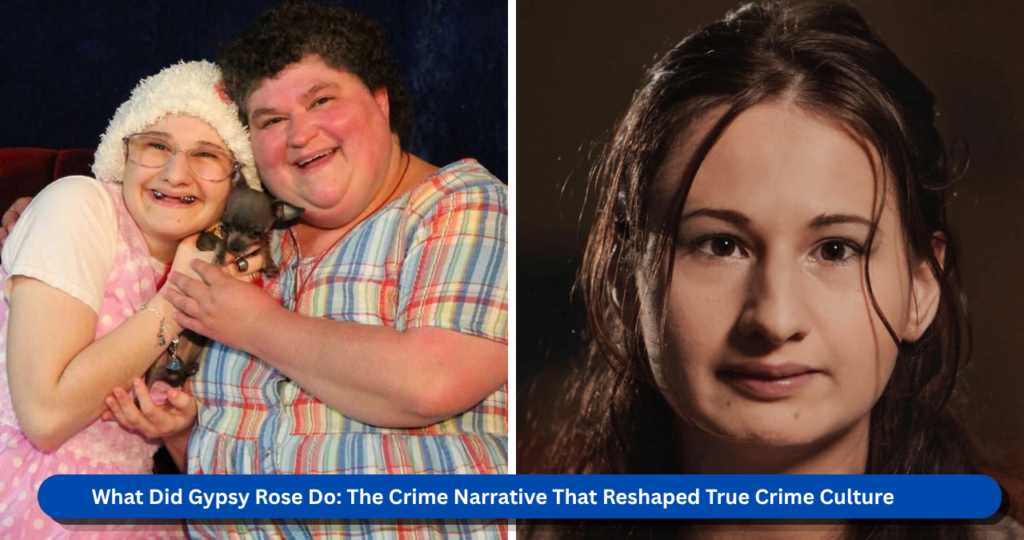
The search phrase what did gypsy rose do continues to dominate streaming analytics, documentary engagement metrics, and true crime search behavior because the case merged criminal law, psychological abuse, media spectacle, and digital age celebrity into one of the most commercially influential narratives of the last decade. Few criminal cases generated the same level of crossover appeal across platforms like HBO, Hulu, Lifetime, TikTok, YouTube, and podcast networks, where audiences increasingly consume real life stories with the same emotional investment once reserved for prestige television franchises.
Within the broader entertainment ecosystem, Gypsy Rose Blanchard became more than the subject of a headline crime story because her case exposed how public sympathy, courtroom narratives, and streaming economics now intersect in modern media culture. Producers, journalists, and documentary executives recognized the commercial durability of the story early, especially as public attention shifted from simple criminality toward questions involving abuse, manipulation, disability fraud, and parental coercion. That transition dramatically changed audience perception and expanded the case beyond tabloid coverage into prestige nonfiction storytelling.
An analytical look at what did gypsy rose do requires more than a summary of a criminal investigation because the story now represents a case study in reputation evolution, media monetization, and the transformation of trauma into global streaming content. The conversation includes legal accountability, psychological conditioning, family dynamics, internet influence, and post prison celebrity culture. It also reflects how modern audiences consume crime stories through a lens shaped by empathy, social media activism, and long form documentary storytelling rather than through traditional courtroom reporting alone.
Profile Snapshot
| Category | Details |
|---|---|
| Full Name | Gypsy Rose Blanchard |
| Known For | The murder case involving Dee Dee Blanchard and the resulting true crime media phenomenon |
| Date Of Birth | July 27, 1991 |
| Birthplace | Golden Meadow, Louisiana, United States |
| Nationality | American |
| Profession | Author, Media Personality, and True Crime Subject |
| Years Active | 2015–Present in Public Media Coverage |
| Major Awards | No Competitive Entertainment Awards |
| Production Company | Various Documentary and Television Partnerships |
| Estimated Net Worth | Estimated Between $1 Million And $3 Million |
Early Life And Personal Foundations
Understanding what did gypsy rose do begins with the environment created by her mother Dee Dee Blanchard, whose alleged pattern of medical deception shaped nearly every aspect of Gypsy Rose’s childhood. Born in Louisiana and later relocated to Missouri after Hurricane Katrina, Gypsy Rose spent years presented publicly as severely ill, physically disabled, and cognitively impaired despite evidence later suggesting many conditions were fabricated or exaggerated. Family members and neighbors frequently described Dee Dee as controlling, persuasive, and deeply invested in maintaining sympathy driven narratives that attracted charity support, free housing, travel opportunities, and media attention. The household dynamic reportedly isolated Gypsy Rose from independent relationships, education, and social development. Analysts of the case often argue the emotional conditioning created an unusual dependency structure where manipulation, fear, and public performance replaced normal parental guidance and adolescent identity formation.
Career Evolution And Breakthroughs
The central answer to what did gypsy rose do involves the 2015 murder of Dee Dee Blanchard, a crime planned with Gypsy Rose’s then boyfriend Nicholas Godejohn after years of alleged abuse and psychological control. Investigators concluded Gypsy Rose coordinated aspects of the attack while Godejohn carried out the killing inside the family home in Springfield Missouri. Yet the story became culturally explosive because public perception shifted almost immediately after details about fabricated illnesses and coercive parenting emerged. Prosecutors pursued criminal accountability, but media coverage increasingly framed Gypsy Rose as both participant and victim. That duality transformed the case into premium documentary material. HBO documentaries, Hulu dramatizations, and major television interviews elevated the narrative into a commercially durable true crime franchise that reshaped how networks package trauma centered storytelling for streaming era audiences.
Major Works Achievements And Cultural Influence
Although Gypsy Rose Blanchard is not a traditional Hollywood figure, the commercial ecosystem built around her story achieved significant cultural reach across streaming platforms, cable television, publishing, and social media discourse. The Hulu series The Act starring Patricia Arquette and Joey King expanded the case into prestige television territory, while documentaries such as Mommy Dead And Dearest introduced broader audiences to allegations surrounding Munchausen syndrome by proxy. The question what did gypsy rose do became one of the most searchable true crime phrases online because the case blended emotional complexity with shocking criminal detail. Media executives recognized that audiences were responding not only to the homicide itself but to broader themes involving healthcare exploitation, parental manipulation, disability representation, and internet age identity construction. The case also influenced future documentary development strategies centered on emotionally layered criminal narratives.
Relationships Love Life And Inner Circle
Public fascination with Gypsy Rose relationships intensified because her romantic decisions often unfolded alongside media scrutiny and post prison celebrity culture. Nicholas Godejohn became central to the criminal investigation after the pair connected online and developed an emotionally dependent relationship shaped by fantasy role play, secrecy, and mutual isolation. Prosecutors argued the relationship escalated criminal planning, while defense discussions frequently emphasized Gypsy Rose’s limited emotional maturity due to years of alleged control inside the family home. After incarceration, Gypsy Rose later married Ryan Anderson before their separation drew additional tabloid attention and renewed online debate regarding fame, rehabilitation, and authenticity. Family relationships also evolved publicly, particularly through reconnecting with her father Rod Blanchard and stepmother Kristy Blanchard. Industry observers note that her ongoing visibility reflects modern audiences’ desire to follow real life figures with the same continuity once reserved for reality television personalities.
Lifestyle Net Worth And Business Ventures
The financial dimension behind what did gypsy rose do demonstrates how modern true crime narratives can generate long term commercial value through licensing agreements, publishing opportunities, interviews, and streaming partnerships. Following her release from prison, Gypsy Rose entered a media landscape eager for exclusive access, particularly as streaming companies competed aggressively for emotionally resonant nonfiction content. Revenue opportunities emerged through memoir publishing, documentary participation, social media monetization, and television licensing arrangements connected to her life story. Unlike traditional celebrity wealth built through box office success or music catalogs, her financial positioning reflects attention economy dynamics where public curiosity becomes a monetizable asset. Analysts covering entertainment economics frequently point to her case as evidence that documentary centered personalities can now command substantial visibility and negotiating leverage without conventional Hollywood career structures or longstanding studio affiliations.
Public Image Media Coverage And Reputation
Media narratives surrounding Gypsy Rose Blanchard changed dramatically between her arrest and post prison reintegration, illustrating how audience empathy can reshape public reputation in the streaming era. Early headlines focused heavily on homicide, deception, and criminal conspiracy, but documentaries and investigative reporting later reframed the story around alleged abuse, coercion, and psychological captivity. That transition significantly influenced how viewers answered the question what did gypsy rose do because the narrative became morally layered rather than legally simplistic. Social media accelerated the shift further, especially on TikTok where younger audiences discussed trauma psychology, manipulative parenting, and institutional failure. Critics, however, argue that excessive celebrity treatment risks minimizing the severity of the crime itself. The resulting debate reflects broader tensions inside true crime media, where emotional storytelling and commercial success sometimes complicate public understanding of accountability.
Hannah Hampton Partner: The Competitive Psychology Behind Modern Football Influence
Recent Updates And Current Focus
Since leaving prison, Gypsy Rose Blanchard has focused heavily on media controlled storytelling, selective interviews, and rebuilding a public identity independent from the criminal case that defined her notoriety. Streaming partnerships, documentary appearances, and publishing activity remain central to her visibility strategy because audiences continue searching what did gypsy rose do in connection with rehabilitation, fame, and personal reinvention. She has also expanded her presence across social platforms where follower engagement frequently rivals established reality television personalities. Entertainment executives increasingly understand that audiences are drawn to ongoing transformation arcs rather than isolated crime stories, making her post prison transition commercially valuable content. Recent media attention additionally centered on personal milestones, evolving family dynamics, and discussions regarding motherhood, all of which contribute to the broader repositioning of Gypsy Rose from criminal defendant to long term cultural figure.
Lesser Known Facts About Gypsy Rose Blanchard
Several lesser known details about Gypsy Rose Blanchard help explain why the story sustained extraordinary media longevity beyond standard crime coverage. Investigators discovered she secretly maintained online profiles and private digital communications despite intense household restrictions, revealing a hidden effort to construct independence within an environment reportedly dominated by surveillance and manipulation. Friends who interacted with her online frequently described a personality far different from the medically fragile public image presented by Dee Dee Blanchard. During periods of national media attention, Gypsy Rose also demonstrated unusually strong awareness of public narratives and audience reaction, something analysts believe contributed to her effectiveness in interviews after incarceration. Another overlooked element involves how charities, healthcare systems, and community organizations unintentionally reinforced the deception by rewarding emotionally compelling stories without fully investigating inconsistencies surrounding medical diagnoses and treatment histories.
Why Gypsy Rose Blanchard Matters Today
The enduring relevance of Gypsy Rose Blanchard reflects major shifts in how audiences consume crime stories, evaluate trauma, and interpret moral responsibility in the digital era. The phrase what did gypsy rose do remains highly searchable because the case intersects with broader cultural conversations involving mental health, disability fraud, parental authority, internet radicalization, and the monetization of personal suffering. Streaming platforms transformed the story into recurring content because it continuously generates engagement across demographics that normally consume separate forms of entertainment media. Industry strategists also view the case as evidence that modern nonfiction storytelling now competes directly with scripted prestige drama for audience loyalty and advertising value. Her cultural position demonstrates how real life figures can evolve into long term media brands shaped equally by public sympathy, controversy, social discourse, and platform driven visibility economics.
Conclusion
The continued fascination surrounding what did gypsy rose do illustrates how one criminal case evolved into a defining example of twenty first century media transformation, where courtroom narratives, streaming platforms, and audience psychology now operate within the same commercial ecosystem. Gypsy Rose Blanchard became culturally significant not because the crime itself was unprecedented, but because the story challenged traditional assumptions about victimhood, accountability, fame, and public empathy. Documentary producers, television executives, and social media platforms amplified those complexities into a durable entertainment phenomenon that still influences true crime development strategies today. Her lasting relevance ultimately reflects broader changes in how audiences engage with real life narratives, particularly when emotional trauma, internet culture, and celebrity style branding intersect inside an increasingly competitive attention economy.
Frequently Asked Questions
What Did Gypsy Rose Do That Made The Case Famous?
The phrase what did gypsy rose do refers to Gypsy Rose Blanchard’s involvement in the 2015 murder of her mother Dee Dee Blanchard. Authorities determined she helped plan the killing with Nicholas Godejohn after years of alleged medical abuse and psychological control inside the family home.
Why Did Audiences Sympathize With Gypsy Rose Blanchard?
Many viewers sympathized with Gypsy Rose after documentaries and investigative reports detailed allegations that her mother fabricated illnesses and restricted her independence for years. The emotional complexity of the case shifted public perception from simple criminality toward a broader discussion about abuse and coercive parenting.
How Did Streaming Platforms Influence The Story?
Streaming services such as Hulu and HBO transformed the case into a major entertainment property through dramatizations and documentaries. Those productions expanded awareness beyond traditional crime reporting and helped establish the story as one of the defining true crime narratives of the streaming era.
Who Was Nicholas Godejohn In The Investigation?
Nicholas Godejohn was Gypsy Rose Blanchard’s boyfriend at the time of the crime and the individual who physically carried out the killing. Prosecutors argued the pair planned the attack together after meeting online and developing an emotionally dependent relationship.
What Is Gypsy Rose Blanchard’s Estimated Net Worth?
Estimated figures vary, but media analysts generally place her net worth between one million and three million dollars. Income sources reportedly include documentary participation, publishing agreements, interviews, and social media related opportunities.
Why Does The Public Still Search What Did Gypsy Rose Do?
The case remains culturally relevant because it combines crime, psychological abuse, internet relationships, and media spectacle in a way few stories have matched. Public interest also continues due to her post prison visibility and ongoing reinvention within entertainment media.
Did Gypsy Rose Blanchard Serve Prison Time?
Yes, she served prison time after accepting a plea agreement connected to second degree murder charges. Her release reignited public debate regarding rehabilitation, accountability, and celebrity culture surrounding true crime figures.
What Role Did Social Media Play In The Story’s Longevity?
TikTok, YouTube, podcasts, and online discussion forums dramatically extended the life cycle of the case. Younger audiences especially used social platforms to debate trauma psychology, family manipulation, and media ethics connected to Gypsy Rose Blanchard.
How Accurate Was The Hulu Series The Act?
The Act drew heavily from documented events and investigative reporting, though some scenes were dramatized for narrative impact. The series significantly increased mainstream awareness of the case and introduced it to audiences unfamiliar with earlier documentaries.
What Does The Case Reveal About Modern True Crime Media?
The ongoing attention surrounding what did gypsy rose do demonstrates how true crime now operates as a major entertainment business category. Networks and streaming companies increasingly prioritize emotionally layered stories that encourage long term audience engagement, debate, and social media participation.