
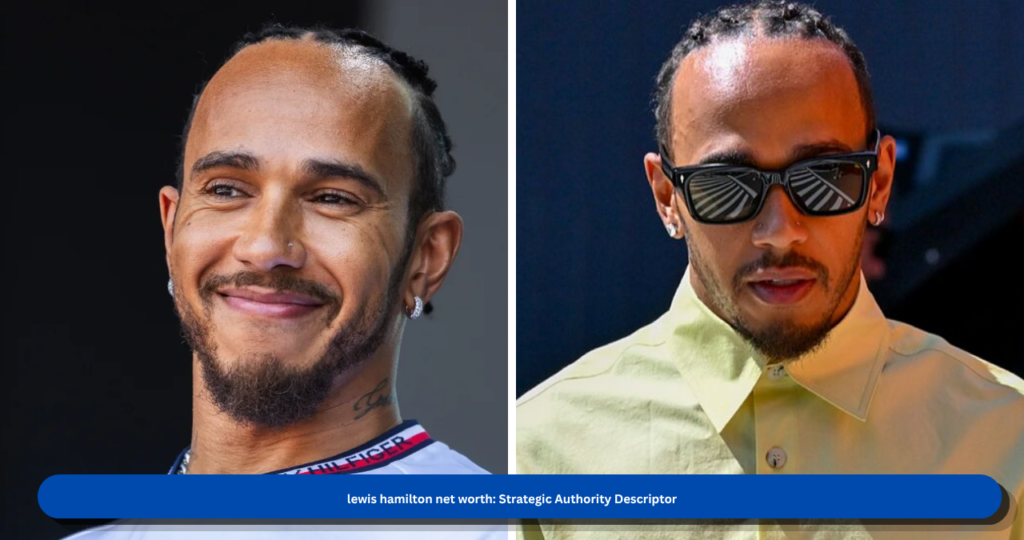
lewis hamilton net worth: The financial architecture surrounding Lewis Hamilton transcends conventional celebrity wealth narratives, positioning the seven-time Formula One World Champion as a singular case study in athletic monetization and brand leverage. While traditional sports figures accumulate wealth through contracts and endorsements, Hamilton has engineered a commercial ecosystem that rivals the revenue streams of major Hollywood franchises, with his net worth functioning as both a career metric and a cultural indicator. The intersection of his on-track dominance, his off-track business acumen, and his status as a global style icon has created a financial portfolio that continues to expand even as his competitive calendar evolves, making his net worth a subject of intense interest across entertainment, sports, and business media.
Within the competitive hierarchy of global sports figures, Hamilton occupies a tier reserved for those who have successfully translated athletic excellence into enduring commercial power. His relationship with Mercedes-AMG Petronas, his endorsement partnerships with luxury brands like IWC Schaffhausen and Tommy Hilfiger, and his strategic investment in diverse sectors including plant-based food technology and professional sports franchises demonstrate a sophisticated understanding of wealth preservation and growth. Unlike many athletes whose earnings peak during their competitive prime, Hamilton has constructed a post-driving financial infrastructure that ensures his net worth continues its upward trajectory, leveraging his cultural authority as a fashion icon and social justice advocate to attract partnerships that traditional athletes rarely access.
This analysis examines the multifaceted components of Lewis Hamilton’s net worth through the lens of career economics, cultural influence, and strategic reinvention. We will explore how his racing achievements translate into financial leverage, how his personal brand has evolved from sporting prodigy to global tastemaker, and how his business ventures signal a deliberate transition from driver to entrepreneur. The numbers themselves tell only part of the story—the true significance lies in how Hamilton has redefined the financial possibilities for athletes in the modern era, creating a blueprint for commercial longevity that extends far beyond the racetrack.
Profile Snapshot
| Full Name | Lewis Carl Davidson Hamilton |
|---|---|
| Known For | Formula One World Champion, Fashion Icon, Social Activist |
| Date Of Birth | 7 January 1985 |
| Birthplace | Stevenage, Hertfordshire, England |
| Nationality | British |
| Profession | Formula One Driver, Entrepreneur, Investor, Philanthropist |
| Years Active | 2007–Present (Formula One) |
| Major Awards | 7x Formula One World Champion, 7x Laureus World Sportsman of the Year, 2x BBC Sports Personality of the Year, MBE |
| Production Company | Neat Burger, Mission 44, The Hamilton Commission |
| Estimated Net Worth | $285–$300 million (2025 estimate) |
Early Life And Personal Foundations
Lewis Carl Davidson Hamilton was born on January 7, 1985, in Stevenage, Hertfordshire, to parents Anthony Hamilton and Carmen Larbalestier, who separated when he was two years old. Raised primarily by his father alongside his half-brother Nicolas, who has cerebral palsy, Hamilton experienced a childhood defined by modest means and extraordinary ambition. Anthony, an IT manager, worked multiple jobs to fund his son’s early karting career, often sleeping in his car at race tracks to save money for travel expenses, a sacrifice that forged an unbreakable bond between father and son while instilling the work ethic that would define Hamilton’s professional trajectory. The racial dynamics of Hamilton’s upbringing, as one of the few Black families in the predominantly white world of British motorsport, cultivated a resilience and determination that would later inform his advocacy work and public persona. His father’s insistence on discipline and strategic thinking, combined with his mother’s emotional support during his formative years, created a foundation of stability that allowed Hamilton to navigate the pressures of elite competition from an exceptionally young age.
Kevin Gates Net Worth: The Financial Strategy Behind A Cultural Music Empire
Career Evolution And Breakthroughs
Hamilton’s professional journey began with a karting career that saw him win the British Cadet Kart Championship at age ten and secure a driver development contract with McLaren at thirteen, making him the youngest driver to ever sign with the team. His progression through the junior formulas was meteoric, winning the Formula 3 Euro Series in 2005 and the GP2 Series championship in 2006, demonstrating a technical understanding of racing dynamics that belied his age. The breakthrough came in 2007 when Hamilton joined McLaren alongside two-time world champion Fernando Alonso, and his rookie season remains one of the most remarkable in Formula One history—securing nine podiums in his first nine races, winning four Grands Prix, and narrowly losing the world championship by a single point to Kimi Räikkönen. The 2008 season delivered his first world championship, becoming the youngest Formula One champion in history at age 23, a record that signaled the arrival of a generational talent. Hamilton’s subsequent move to Mercedes in 2013 represented a career risk that many considered ill-advised, but the partnership would yield six additional world championships between 2014 and 2020, transforming Hamilton from a promising talent into the most statistically successful driver in Formula One history.
Major Works Achievements And Cultural Influence
The statistical magnitude of Hamilton’s career achievements establishes his place among the most dominant athletes across any sport, with 103 Grand Prix victories, 104 pole positions, and seven world championships that tie the legendary Michael Schumacher’s record. Beyond the numbers, Hamilton’s influence extends far beyond the race track, as he has leveraged his platform to advocate for diversity in motorsport, environmental sustainability, and social justice, using his visibility to challenge the conservative traditions of Formula One and push for meaningful institutional change. His 2020 championship season, conducted during the COVID-19 pandemic, saw Hamilton drive while wearing a “Black Lives Matter” t-shirt and taking the knee before races, gestures that sparked controversy within the sport but ultimately contributed to Formula One’s formal commitment to diversity initiatives, including the creation of the We Race As One campaign. Hamilton’s cultural footprint has also manifested through his appearances in major fashion publications, his collaborations with designers, and his ownership stake in the plant-based restaurant chain Neat Burger, each venture amplifying his influence beyond the traditional athlete demographic and establishing him as a global tastemaker with commercial reach that rivals entertainment industry power players.
Relationships Love Life And Inner Circle
Hamilton’s personal relationships have been subject to considerable media scrutiny, though he has maintained a careful boundary between his public persona and private life, rarely confirming romantic partnerships while the tabloid press has speculated about connections with various public figures. His most publicized relationship was with pop singer Nicole Scherzinger, whom he dated intermittently from 2007 to 2015, and the pairing attracted significant media attention due to their combined celebrity status and Hamilton’s growing international profile. The support system surrounding Hamilton includes his father Anthony, who continues to manage his business affairs, his step-mother Linda, and his half-siblings Nicolas and Samantha, with Nicolas serving as a source of inspiration and perspective given his own achievements in the world of disabled motorsport. Hamilton’s friendships with figures like actor Brad Pitt, musician Pharrell Williams, and fellow drivers like Sebastian Vettel reveal a social network that extends across entertainment, music, and sports, while his professional relationships with engineers and team principals at Mercedes have been characterized by mutual respect and a shared commitment to excellence that has sustained a decade of competitive success.
Lifestyle Net Worth And Business Ventures
Lewis Hamilton’s net worth, estimated between $285 and $300 million as of 2025, represents a financial empire built on a foundation of racing salaries, performance bonuses, and a sophisticated portfolio of endorsement deals and business investments. His Mercedes contract, worth approximately $55 million annually during the peak of his tenure, was supplemented by lucrative partnerships with companies including Petronas, Monster Energy, Puma, Sony, and IWC Schaffhausen, each deal carefully structured to align with Hamilton’s evolving personal brand rather than mere commercial exploitation. The strategic diversification of his income streams includes his ownership stake in Neat Burger, a plant-based fast-food chain that has expanded from London to New York and beyond, reflecting Hamilton’s commitment to sustainability and ethical consumption that resonates with his younger fan base. His real estate holdings, including a $40 million penthouse in New York City’s Tribeca neighborhood and a $25 million mansion in Kensington, London, are complemented by an automotive collection that, ironically, includes rare and vintage vehicles despite his commitment to environmental causes, demonstrating the complexity of celebrity wealth management in the modern era.
Public Image Media Coverage And Reputation
Hamilton’s public image has undergone a remarkable evolution from the polarizing figure of his early McLaren years, where he was sometimes perceived as arrogant or overly aggressive, to his current status as a respected elder statesman of the sport whose advocacy and authenticity have won over even former detractors. The media narrative surrounding Hamilton has shifted dramatically, particularly following his decision to speak openly about the racial abuse he experienced as a child and the institutional barriers he faced in motorsport, transforming him from a divisive competitor into a symbol of perseverance and resilience for underrepresented communities globally. His embrace of fashion and high-profile social events, once criticized as a distraction from his racing commitments, is now understood as a deliberate rebranding exercise that has expanded his commercial appeal beyond traditional sports audiences and positioned him as a lifestyle icon. The 2021 Abu Dhabi Grand Prix controversy, where the race director’s procedural error cost Hamilton an eighth world championship, galvanized public support and framed him as a victim of institutional failure, further humanizing his image and deepening the emotional connection with his global fanbase, demonstrating the complex interplay between competition, media, and public perception.
Recent Updates And Current Focus
The 2024 announcement that Hamilton would leave Mercedes for Ferrari at the conclusion of the 2025 season sent shockwaves through the Formula One community, representing one of the most significant driver transfers in the sport’s history and underscoring Hamilton’s continued ambition as he approaches the twilight of his competitive career. His current focus extends beyond the racetrack, with his production company and philanthropic initiatives absorbing increasing amounts of his attention as he prepares for a future in which driving becomes a smaller component of his professional identity. The Hamilton Commission, established in 2020 to improve diversity in motorsport, continues to produce actionable research and recommendations that have influenced Formula One’s approach to inclusion, while his commitment to environmental causes has led him to adopt a largely plant-based diet and invest in sustainable technologies that align with his personal values. Hamilton’s forthcoming move to Ferrari, the most iconic team in Formula One history, represents a storybook conclusion to his career and a final opportunity to secure an unprecedented eighth world championship, while his parallel investments in media production and hospitality suggest a post-racing career that will continue to generate significant media coverage and financial returns.
Lesser Known Facts About Lewis Hamilton
Despite his global celebrity, Hamilton maintains several private interests and habits that surprise even his most devoted followers, including his passion for music production and his regular practice of transcendental meditation, which he credits for maintaining mental clarity during high-pressure race weekends. His fascination with aviation has led him to pursue a pilot’s license, and he has been known to fly himself to certain races and events, a skill that reflects his broader interest in mechanical engineering and precision that extends beyond automotive racing. Hamilton’s commitment to fashion extends to his personal wardrobe, which includes vintage pieces from luxury houses and custom designs from emerging Black designers, reflecting his conscious effort to use his visibility to amplify underrepresented voices in the fashion industry. The driver is also an avid collector of modern art, with pieces by Jean-Michel Basquiat, Kaws, and Banksy featured prominently in his homes, indicating a sophisticated aesthetic sensibility that complements his carefully curated public persona.
Why Lewis Hamilton Matters Today
The enduring significance of Lewis Hamilton’s net worth and cultural influence extends far beyond the financial metrics that dominate headlines, representing a paradigm shift in how athletes can leverage their careers to build lasting commercial empires and advocate for meaningful social change. In an era where authenticity and purpose-driven branding increasingly determine consumer loyalty, Hamilton has successfully navigated the transition from sporting prodigy to cultural icon, using his platform to challenge systemic inequalities while maintaining the competitive edge that made him a seven-time world champion. His willingness to engage with political and social issues, once considered risky for high-profile athletes, has proven commercially viable and has attracted partnerships with brands seeking to align themselves with progressive values, creating a template for athlete activism that balances principle with economic sustainability. As Hamilton prepares for his Ferrari debut and the eventual conclusion of his driving career, his influence on the sport and broader culture appears poised to expand rather than diminish, with his production company, investment portfolio, and advocacy work ensuring that his relevance endures regardless of Formula One results.
Conclusion
Lewis Hamilton has transcended the conventional boundaries of athletic achievement to become a global business empire whose net worth reflects not merely racing success but a masterclass in personal branding, strategic investment, and cultural positioning. His journey from the karting tracks of Hertfordshire to the boardrooms of global corporations demonstrates an entrepreneurial sensibility that has transformed him from a driver into an institution, with financial decisions that mirror the strategic precision he brings to the racetrack. The sustainability of Hamilton’s influence rests on his ability to evolve, to remain culturally relevant across generations, and to leverage his platform for causes that resonate beyond motorsport, ensuring that his legacy extends well beyond championship victories. As he approaches the final chapters of his competitive career, Hamilton stands as a blueprint for modern celebrity, a figure whose commercial empire and cultural authority will continue to generate interest and analysis long after he hangs up his helmet.
Frequently Asked Questions
What is Lewis Hamilton’s estimated net worth?
Lewis Hamilton’s estimated net worth is approximately $285–$300 million as of 2025, derived from his Formula One salaries, performance bonuses, endorsement deals with major global brands, and diversified business investments including his stake in Neat Burger and other strategic ventures.
How did Lewis Hamilton build his financial empire?
Hamilton built his financial empire through a combination of record-breaking Formula One contracts, most notably his $55 million annual salary with Mercedes, strategic endorsement partnerships with luxury and lifestyle brands, and savvy investments in plant-based food technology and other emerging sectors that align with his personal values and brand identity.
What major business ventures does Hamilton own?
Hamilton owns a significant stake in Neat Burger, a plant-based fast-food chain with international locations, and has invested in various sustainability-focused startups. He also founded Mission 44, a philanthropic initiative, and established The Hamilton Commission to research diversity in motorsport, demonstrating his commitment to business ventures that combine commercial returns with social impact.
Is Hamilton the highest-paid driver in Formula One history?
Hamilton has consistently been among the highest-paid drivers in Formula One history, with his 2021 Mercedes contract widely reported as the most lucrative in the sport’s history at $55 million annually, though exact figures vary based on performance bonuses and commercial agreements.
What films or projects has Hamilton been involved with?
Hamilton has executive produced documentary content including the film “Hamilton” which chronicled his 2017 season, and has expressed interest in producing more media projects through his production company, though his primary focus has been on racing and his business investments rather than traditional acting or directing roles.
When did Hamilton win his first World Championship?
Hamilton won his first Formula One World Championship in 2008 at age 23, driving for McLaren, making him the youngest world champion in the sport’s history at that time, a record that stood for over a decade before being surpassed by Sebastian Vettel and then Max Verstappen.
What is Hamilton’s production company?
Hamilton operates under his personal brand for production ventures rather than a formally named production company, though he has established production entities to handle his documentary and media projects, signaling his intention to expand his media footprint after his racing career concludes.
Why is Hamilton making the move to Ferrari?
Hamilton’s move to Ferrari for the 2026 season represents a desire to compete for an unprecedented eighth world championship with Formula One’s most iconic team, a storybook conclusion to his career that also offers substantial commercial opportunities and a fitting capstone to his legendary racing journey.
How many Grand Prix victories does Hamilton have?
Lewis Hamilton has secured 103 Formula One Grand Prix victories as of 2025, making him the winningest driver in Formula One history, surpassing the previous record held by Michael Schumacher.
What charities and causes does Hamilton support?
Hamilton supports numerous charitable causes through Mission 44, which focuses on improving diversity and inclusion in education and motorsport, as well as environmental sustainability initiatives, animal rights organizations, and various youth development programs, using his platform to advocate for systemic change across multiple sectors.